Airfoil Angle of Attack and Shape Study
Airfoil aerodynamic performance across Mach regimes
Jan 2025 - May 2025 | IIT Roorkee, India
Project Context
This project involved a computational study of airfoil aerodynamic performance across subsonic and supersonic regimes. Lift, drag, and flow-field behavior were evaluated for multiple airfoil geometries under variations in angle of attack, thickness, chord length, and Mach number.
Engineering Problem
Quantify lift and drag variation with angle of attack (0°–40°) for different airfoil geometries
Study stall behavior and aerodynamic sensitivity to airfoil shape
Analyze the effect of thickness and chord length on lift and drag for a symmetric airfoil
Investigate compressible and supersonic flow features such as bow shock formation
Approach & Methodology
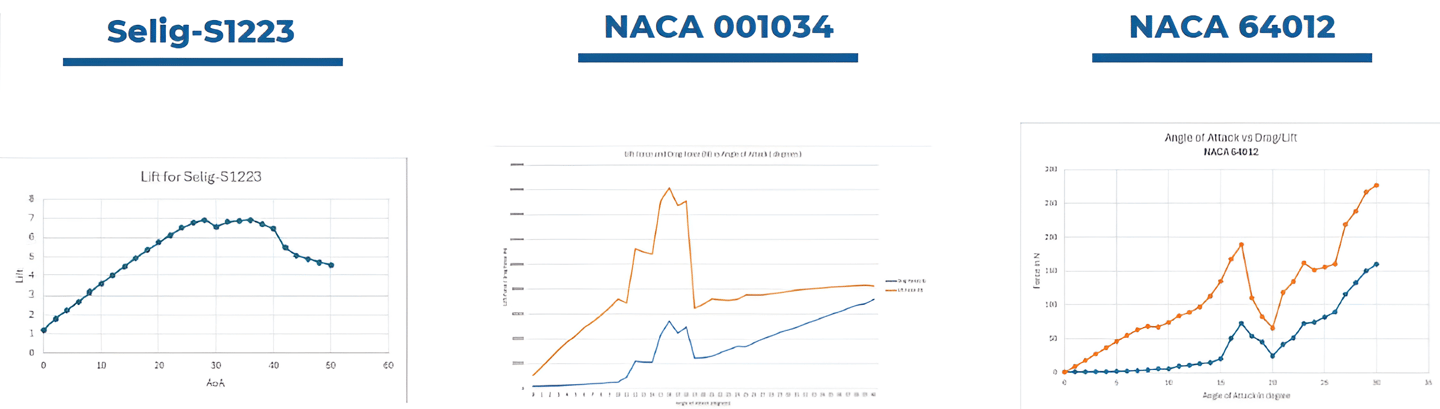
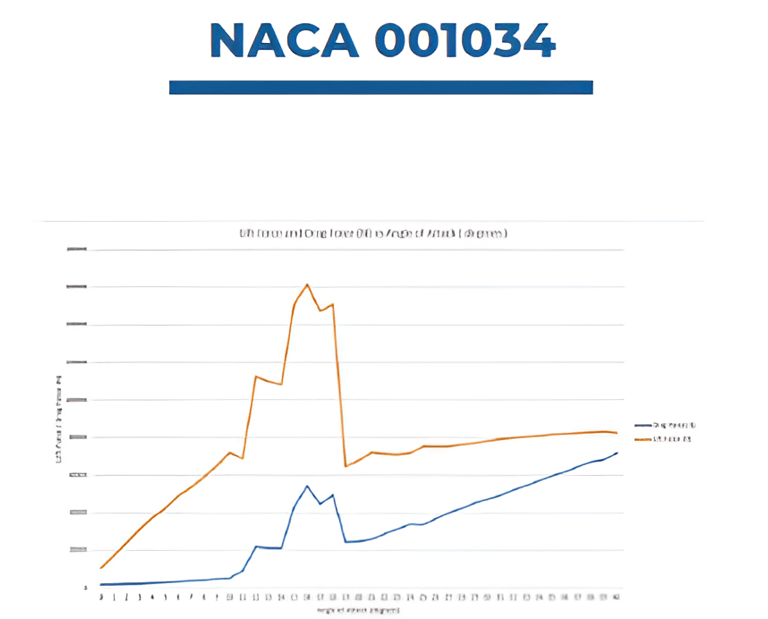
2D CFD simulations were performed in ANSYS Fluent using a pressure-based solver. Three airfoils—Selig S1223, NACA 001034, and NACA 64012—were analyzed for angle-of-attack variation at Mach 0.5 (166.3 m/s, 285 K) to capture weak compressibility effects.
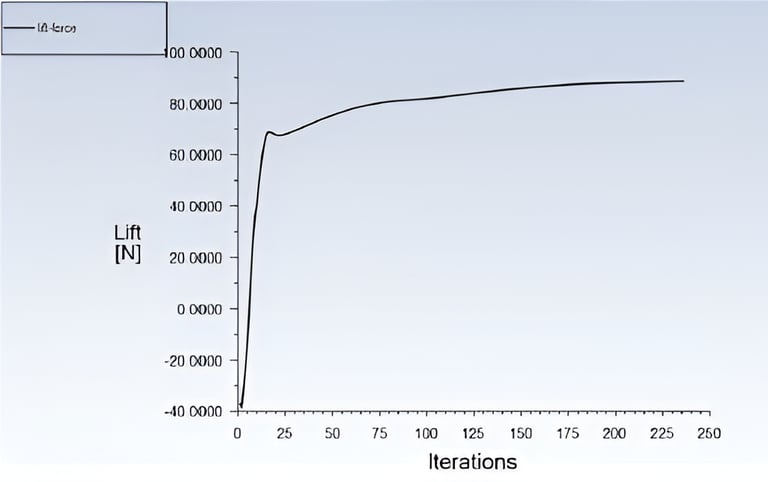
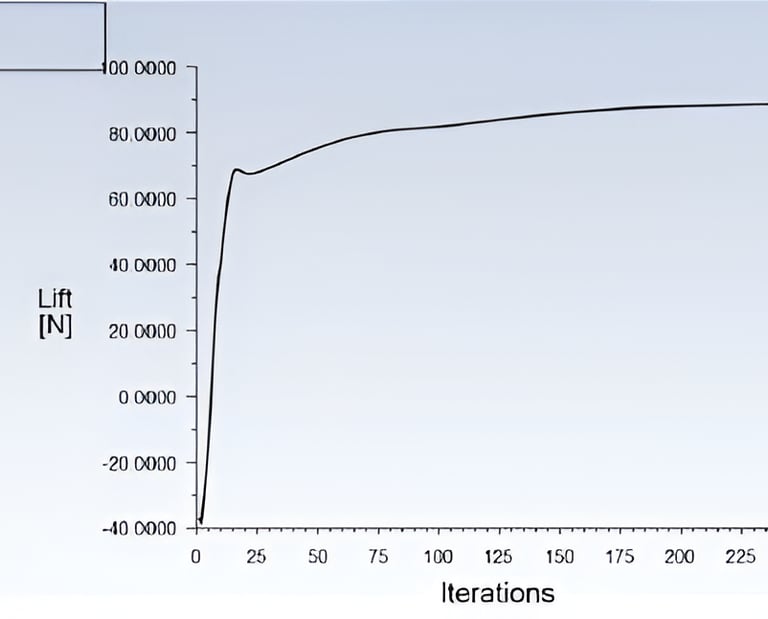
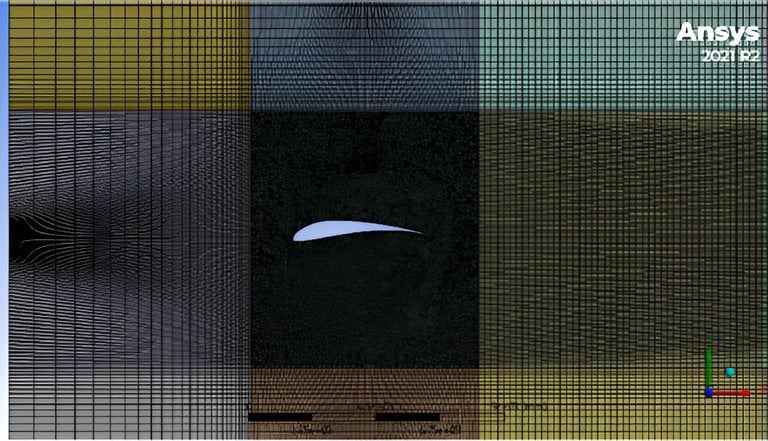
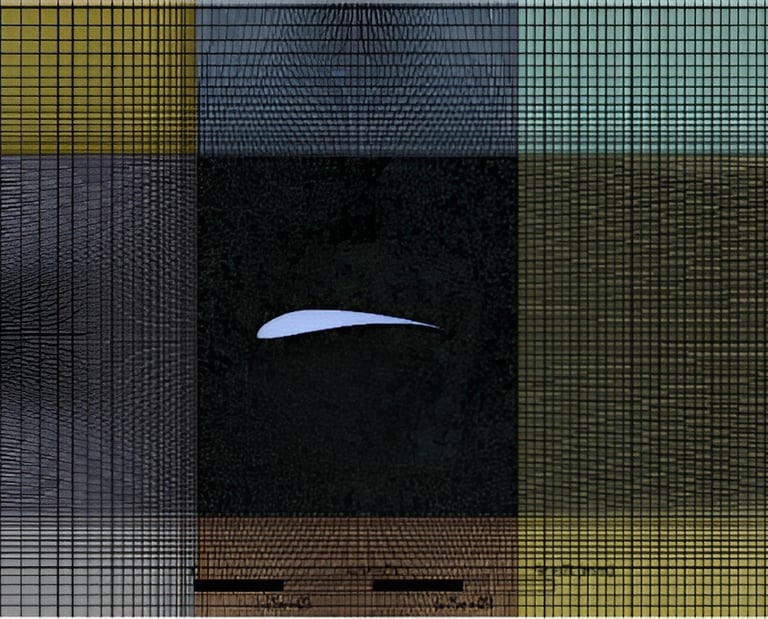
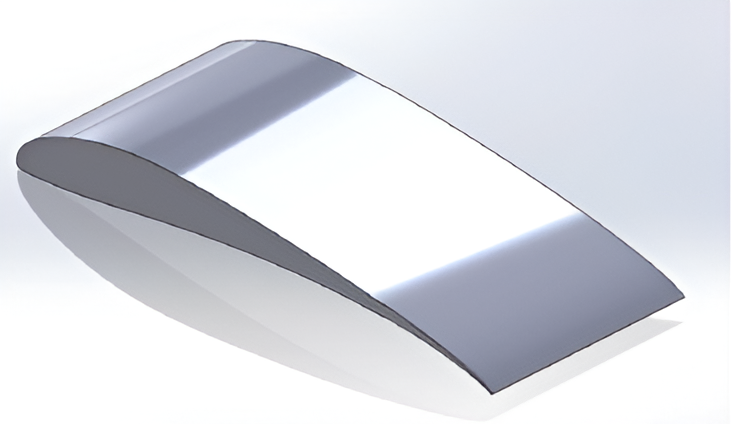
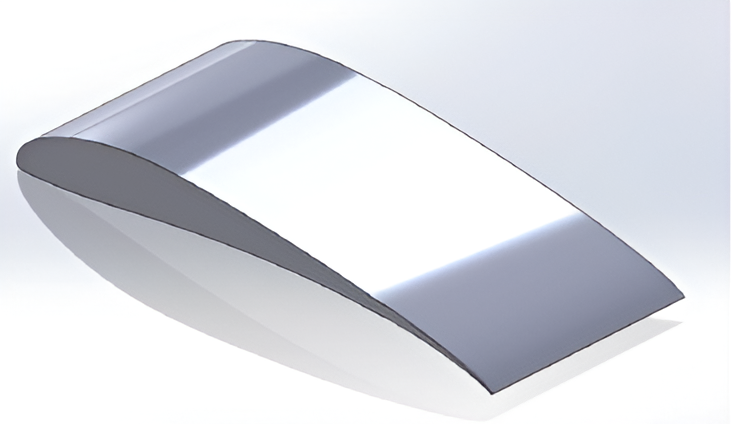
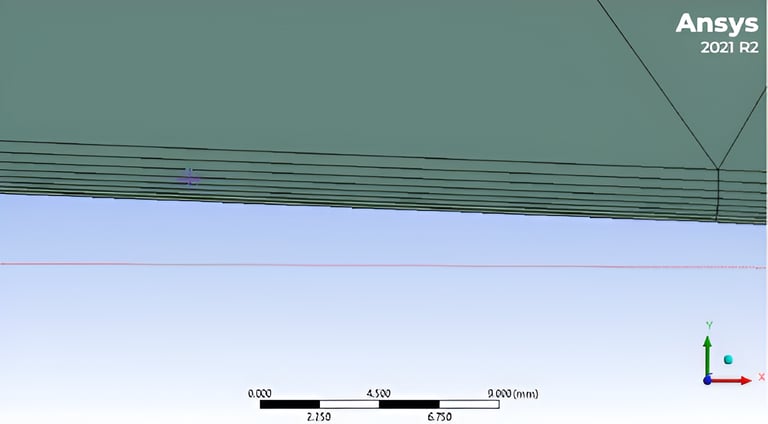
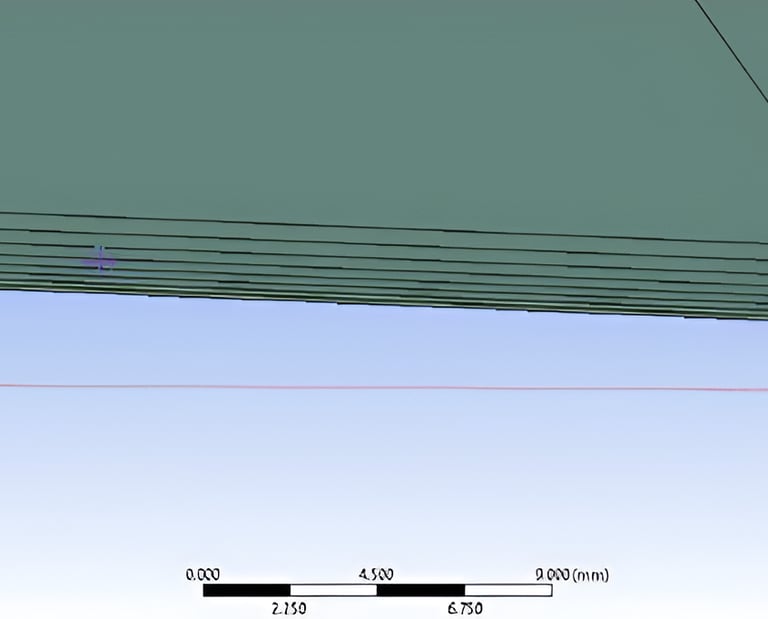
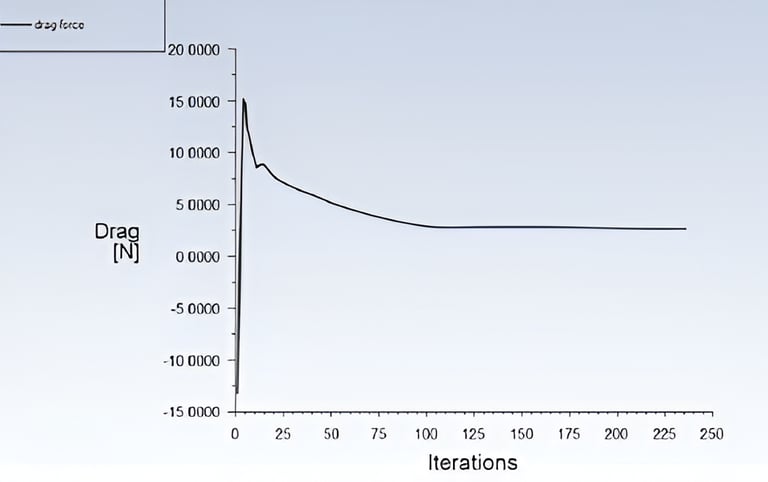
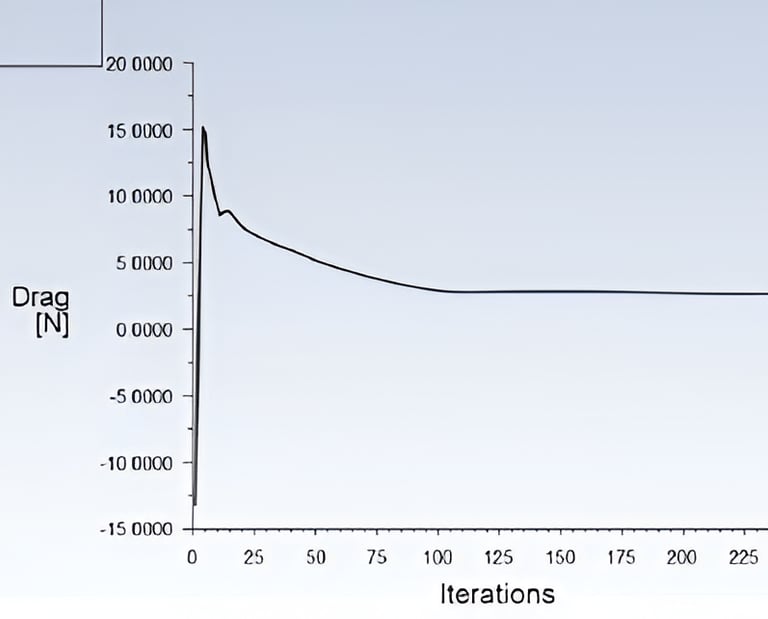
Airfoil geometries were generated from database coordinates, chamfered at the trailing edge, and embedded in a structured external flow domain. Boundary-layer resolution was ensured using inflation layers, with the first cell height calculated analytically (~0.12 mm) to resolve near-wall flow. The k–ω SST turbulence model was used for all simulations. AoA was parametrized in ANSYS Workbench and varied in 1° increments, with convergence verified through lift and drag histories.
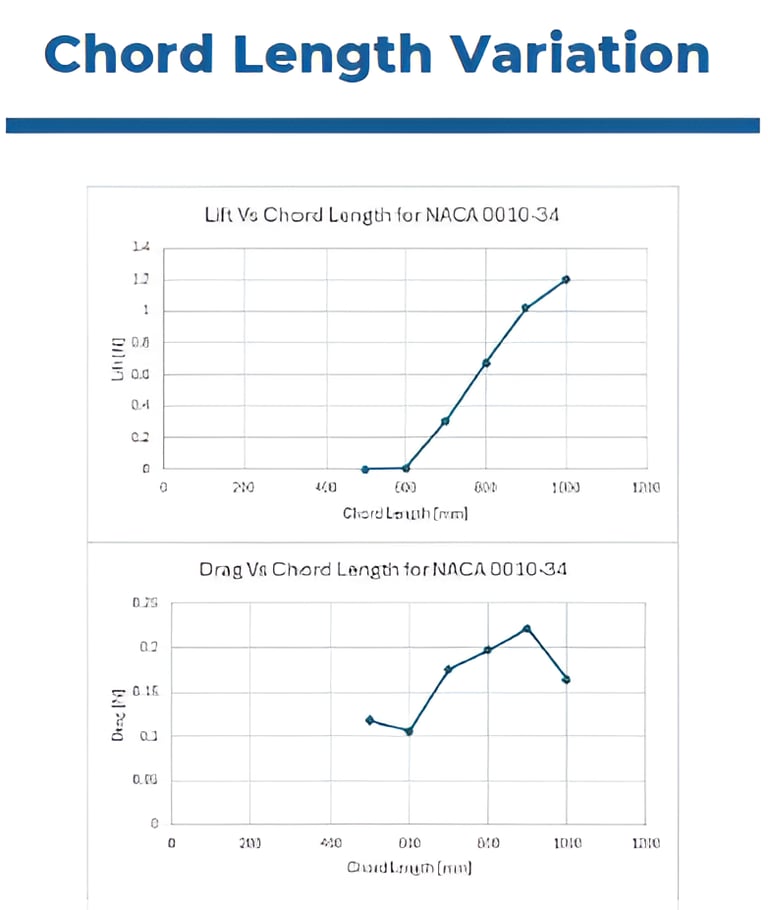
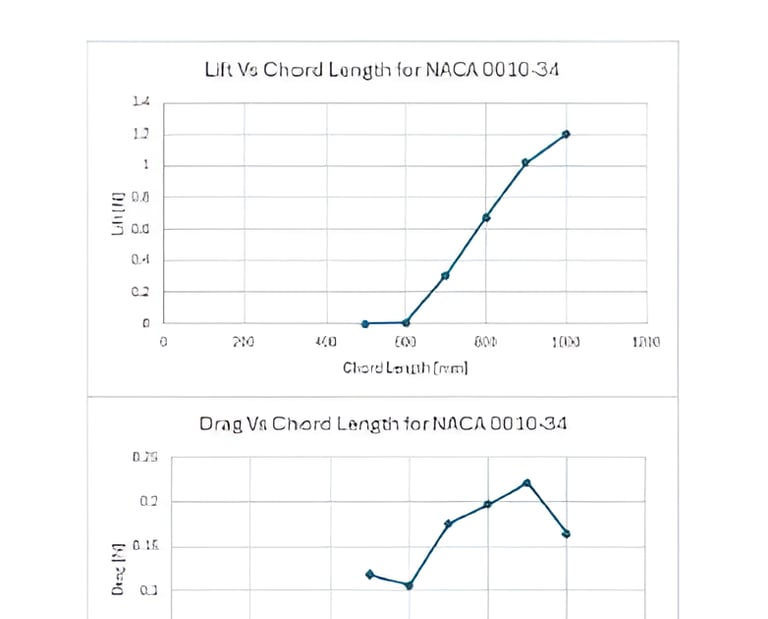
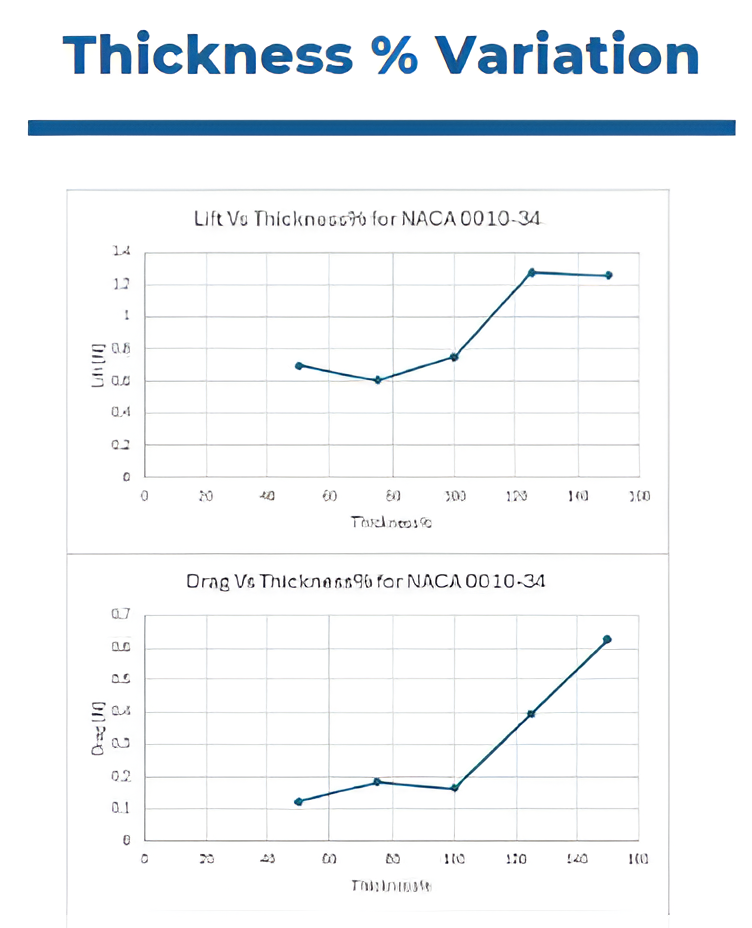
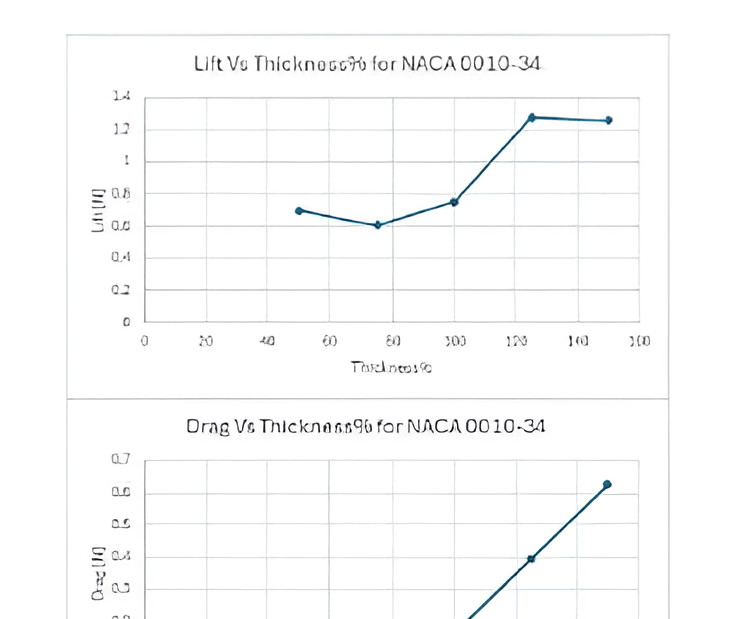
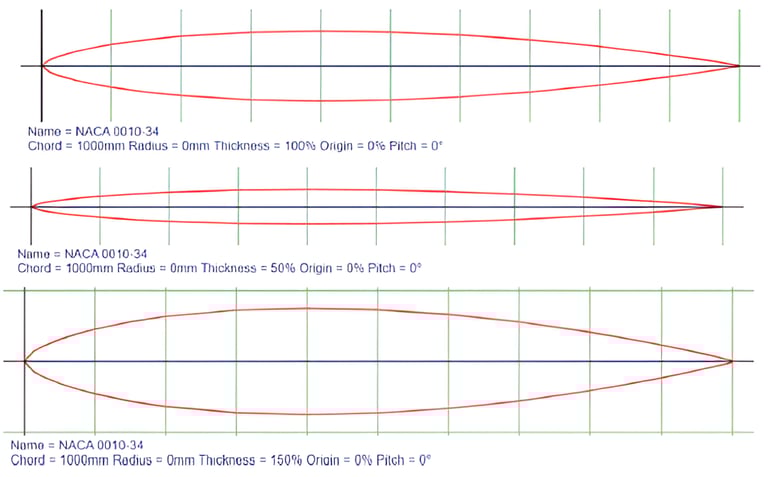
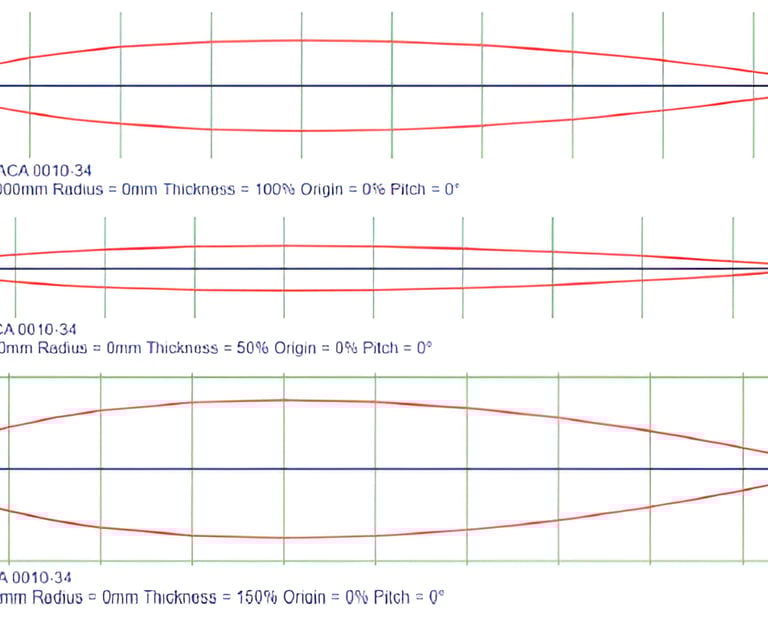
For shape studies, the symmetric NACA 001034 airfoil was used. Thickness was varied from 50% to 150%, and chord length from 0.5 m to 1.0 m, with independent simulations for each case.
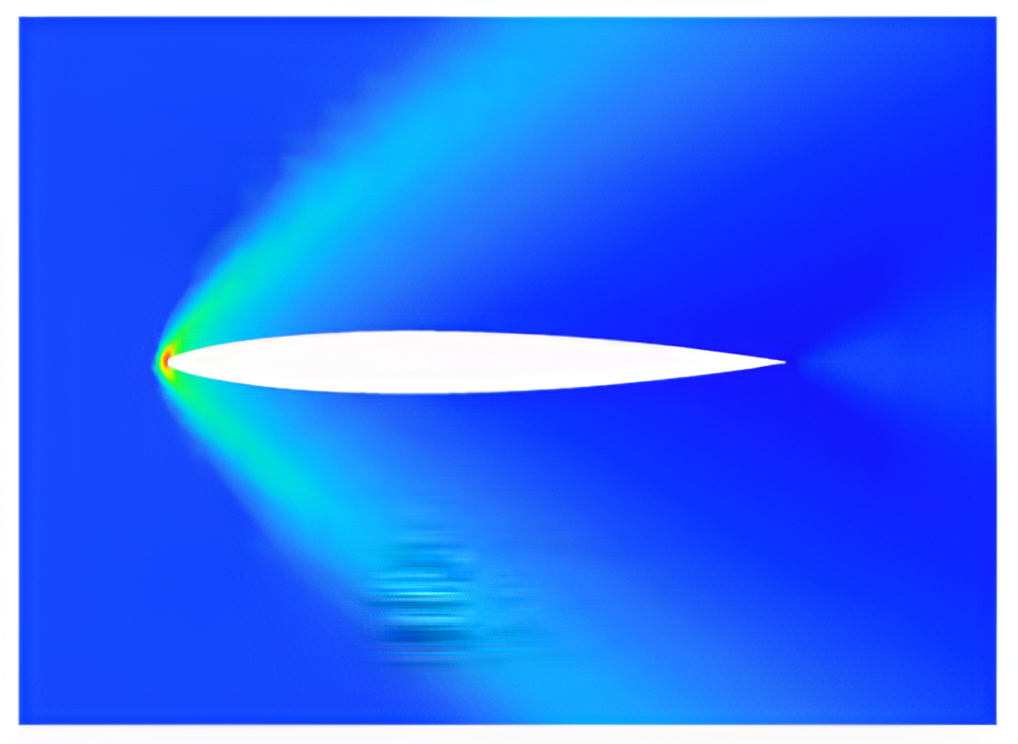
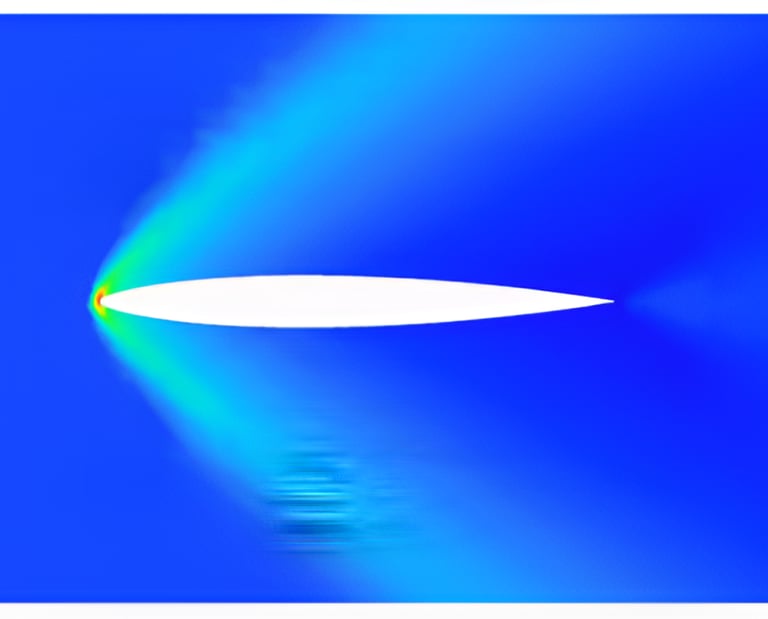
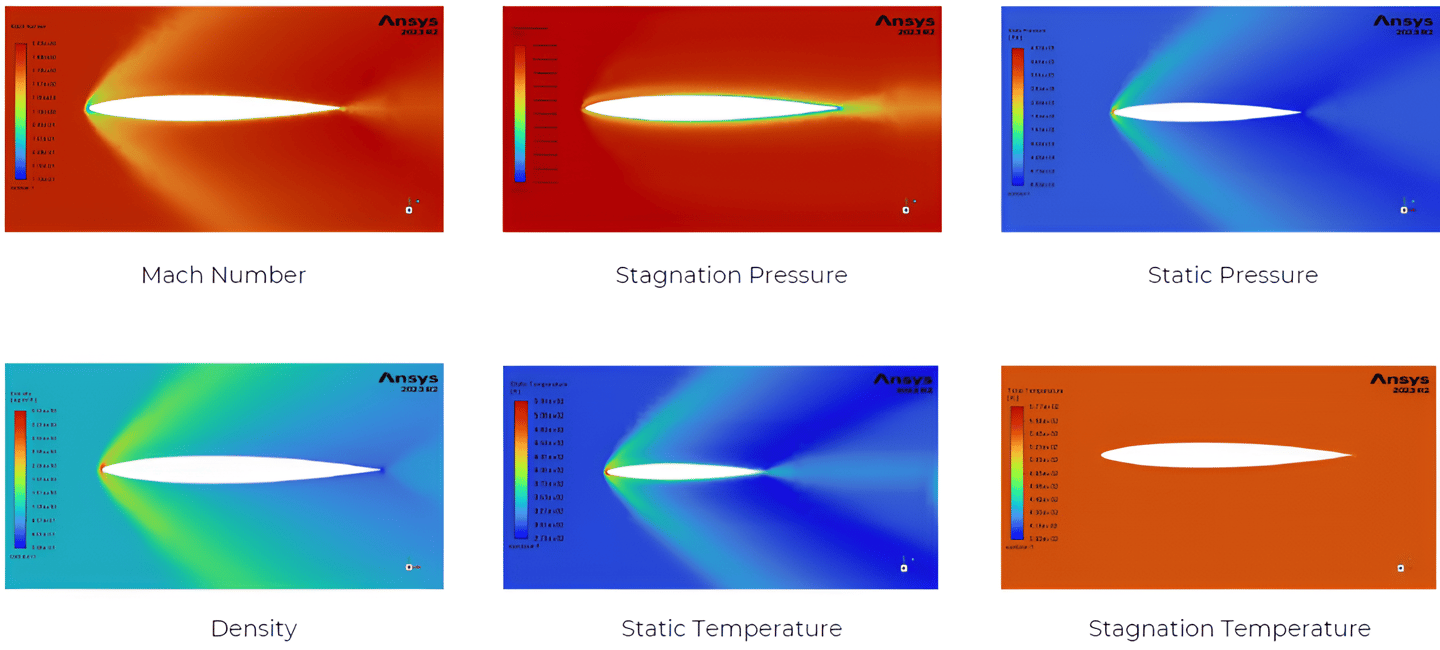
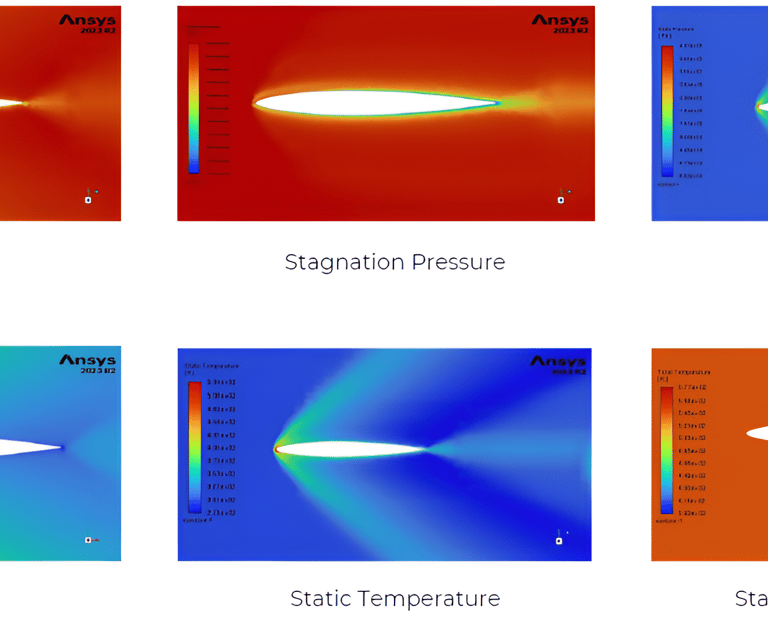
A supersonic case (Mach 2.0) was simulated over the symmetric airfoil to analyze compressible flow behavior. Contours of Mach number, pressure, density, and temperature were examined to study shock formation and thermodynamic changes.
Key Results
Lift and drag increased with angle of attack for all airfoils up to stall, with stall observed at ~20° AoA
Distinct lift–drag characteristics observed across Selig S1223, NACA 001034, and NACA 64012 geometries
Increasing airfoil thickness led to monotonic increases in both lift and drag
Increasing chord length increased lift, with excessive chord promoting flow separation
Supersonic simulations showed bow shock formation ahead of the airfoil and trailing-edge shocks
Across shocks:
Mach number decreased
Static pressure, temperature, and density increased
Stagnation temperature remained constant, while stagnation pressure decreased
Engineering Judgment & Trade-offs
Higher thickness and chord length improve lift generation but incur drag penalties and increased risk of separation. While cambered airfoils offered higher lift, symmetric airfoils enabled clearer isolation of geometric effects. The use of a pressure-based solver at Mach 0.5 provided computational efficiency while remaining valid for weakly compressible flow, whereas supersonic cases required careful interpretation of shock-induced losses.
Tools & Methods
ANSYS Fluent, ANSYS Workbench parametric studies, k–ω SST turbulence model, compressible CFD, boundary-layer meshing, post-processing of aerodynamic coefficients and flow contours.
Outcome / Takeaway
The project delivered a comprehensive CFD-based comparison of airfoil aerodynamic behavior across shape, angle of attack, and flow regime variations. It demonstrated strong understanding of aerodynamic performance trends, stall behavior, and compressible flow physics, including shock formation in supersonic conditions.