Design and Analysis of Bulletproof Vest
Composite layup optimization for ballistic protection
Aug 2022 - Nov 2022 | IIT Roorkee, India
Project Context
This project involved the design and comparative analysis of a multilayer bulletproof vest using composite materials. Multiple material stack-ups were evaluated to balance ballistic impact resistance, thermal comfort, and overall weight using numerical simulations.
Engineering Problem
Absorb and dissipate kinetic energy from a high-velocity projectile
Minimize vest mass while maintaining acceptable deformation limits
Compare composite layer stack-ups for impact resistance and heat dissipation
Select an optimal configuration using quantitative, multi-criteria evaluation
Approach & Methodology
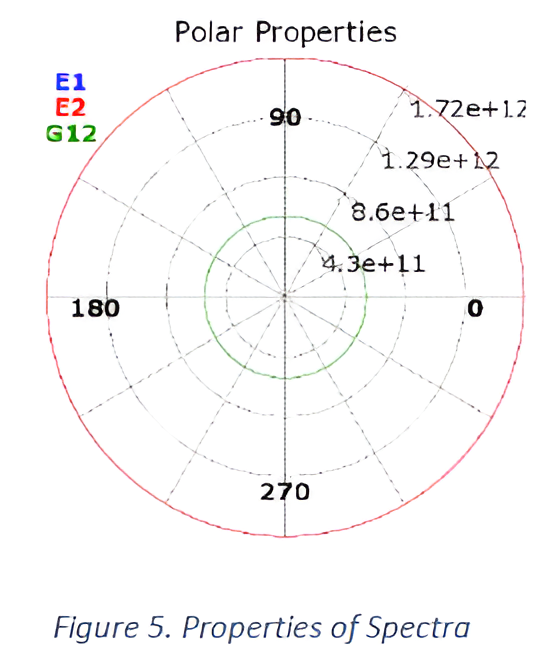
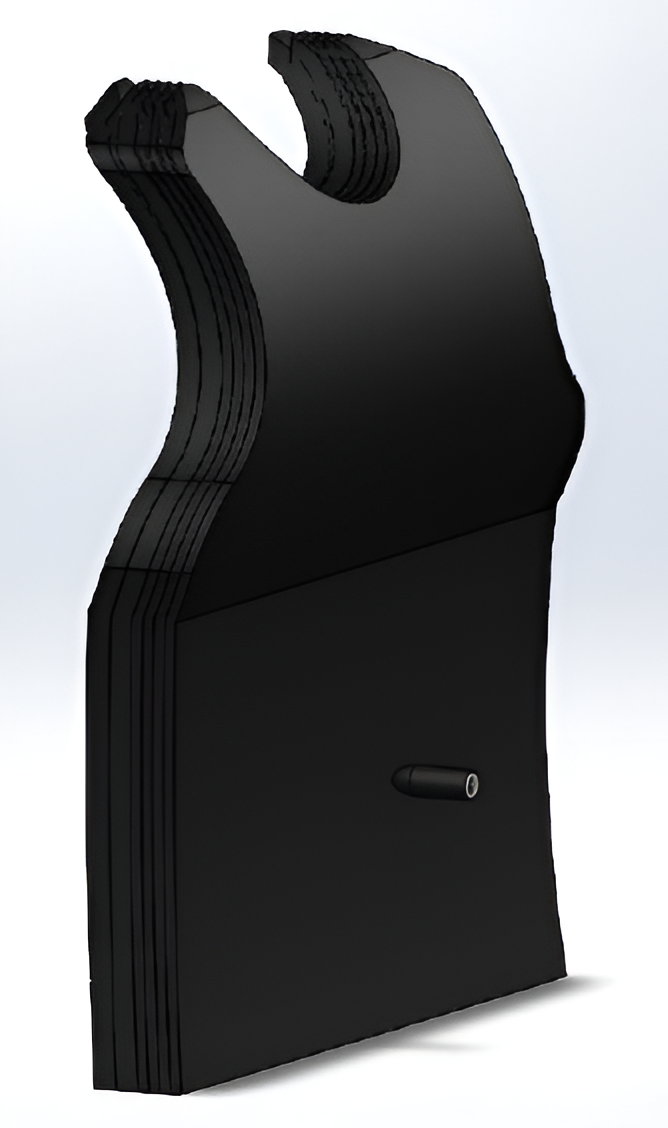
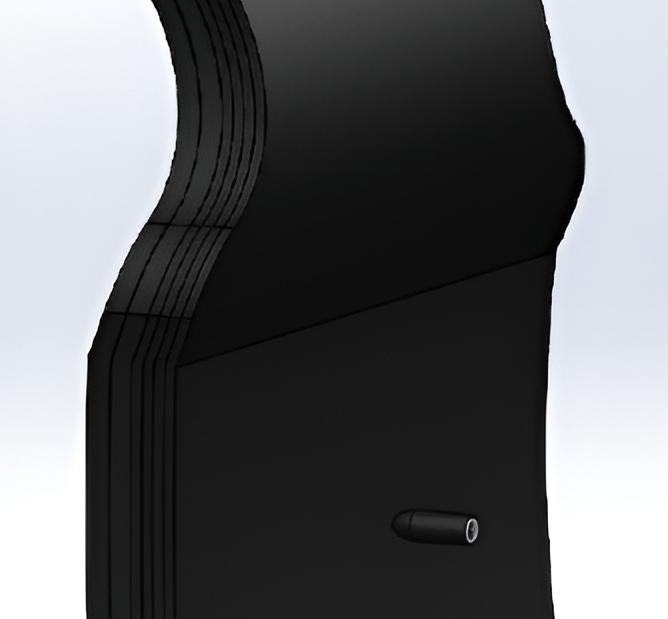
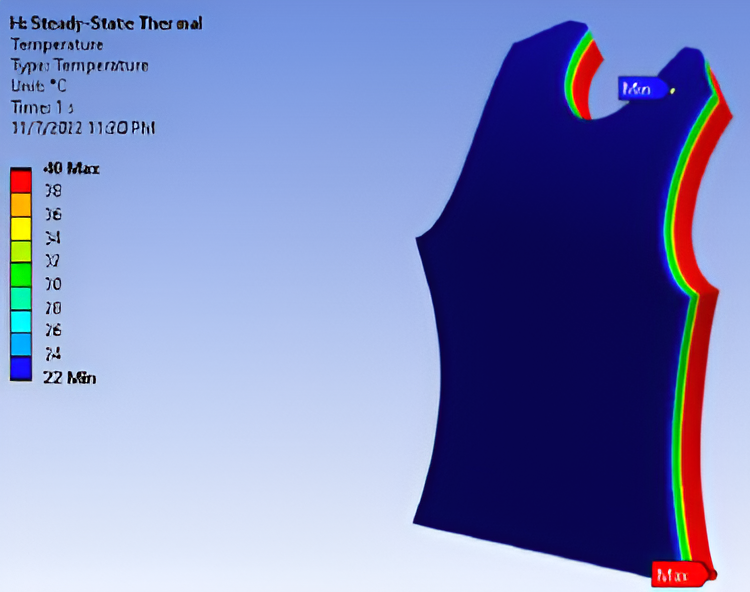
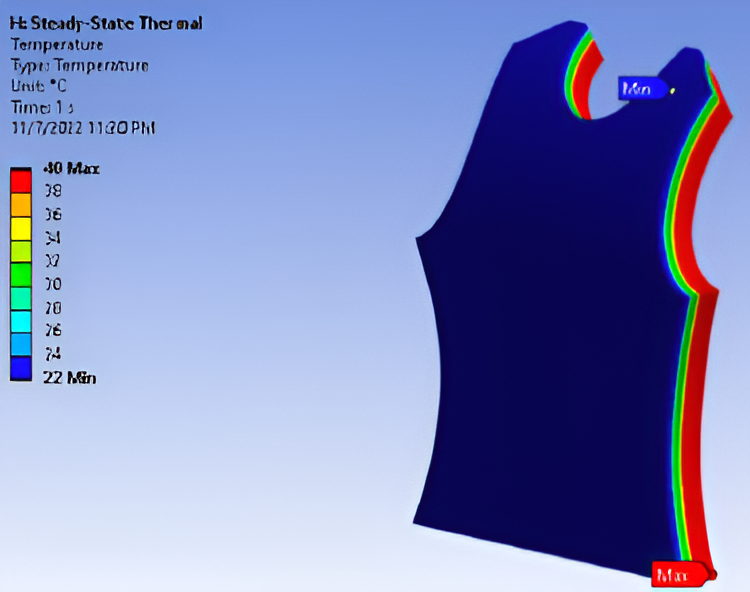
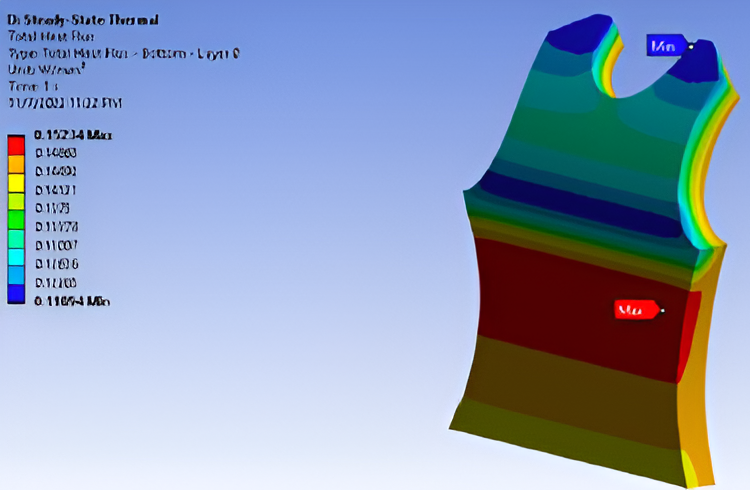
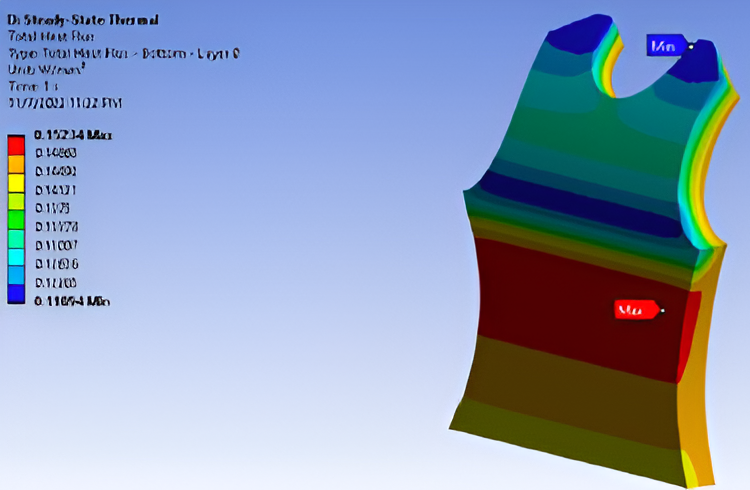
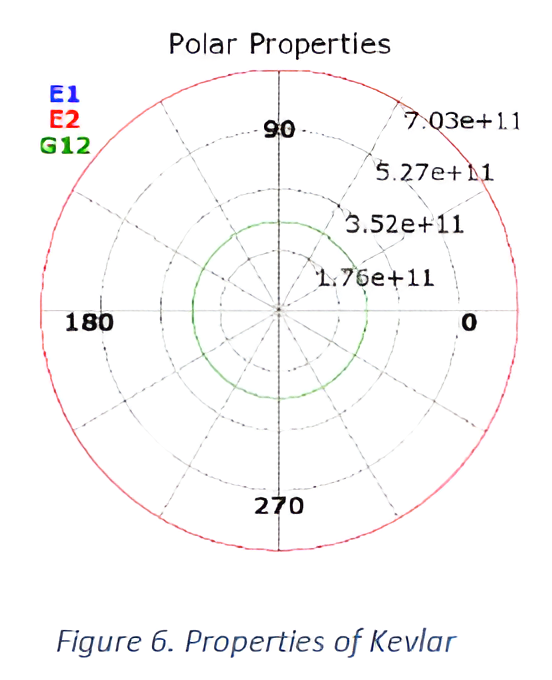
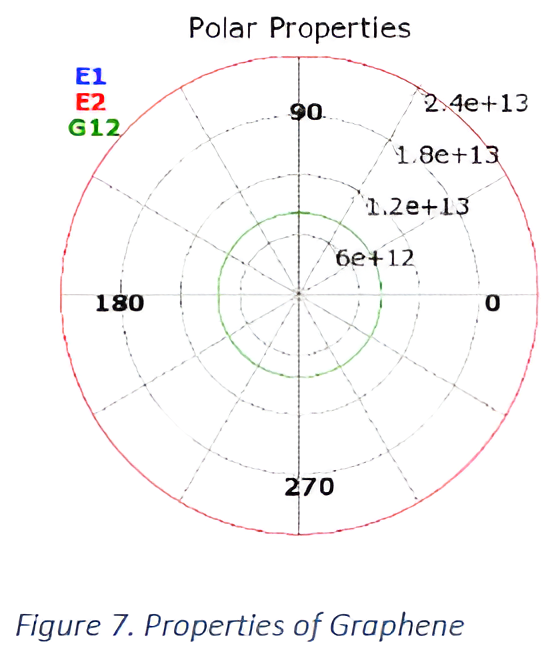
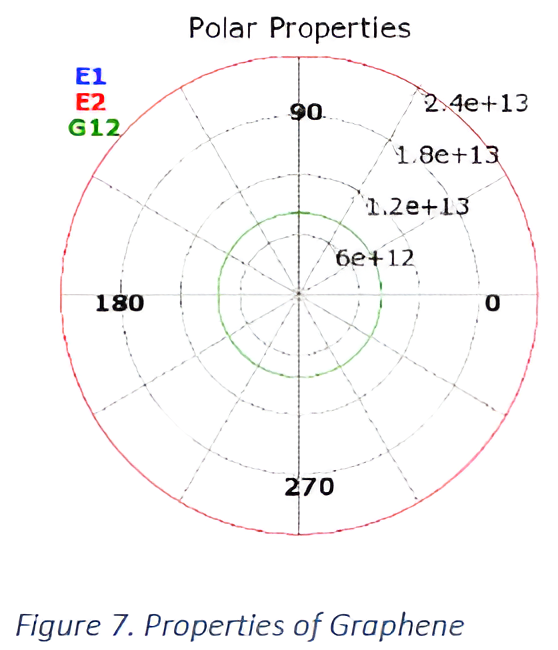
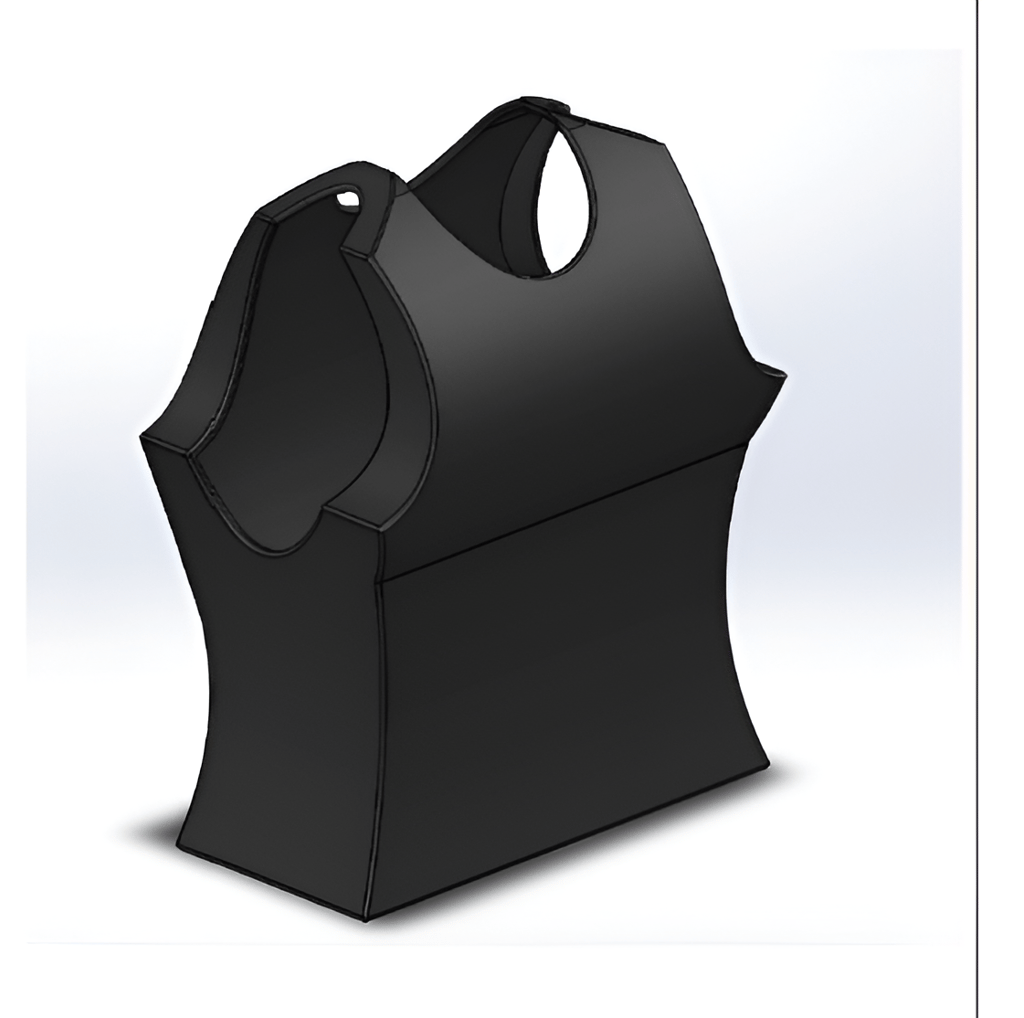
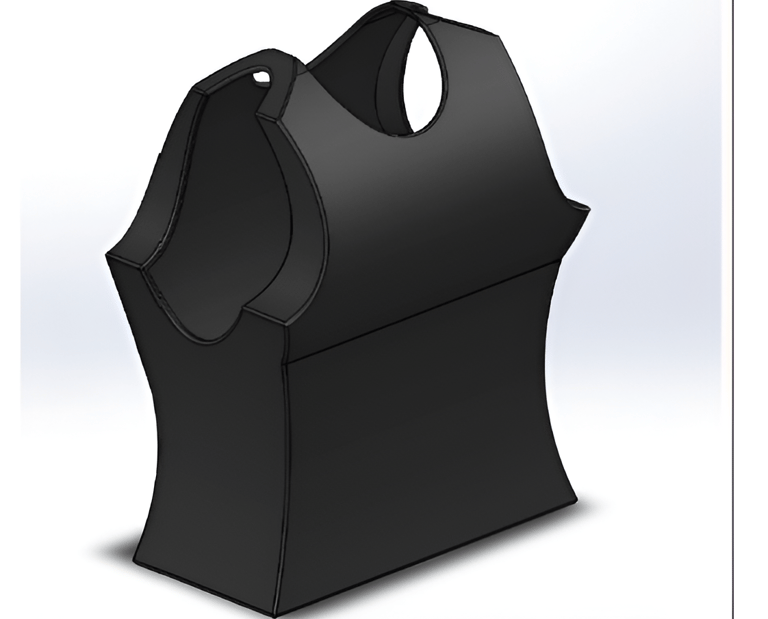
A scaled bullet and vest geometry were modeled in SOLIDWORKS and assembled as layered composites. Composite stack-ups were defined in ANSYS ACP (Pre) using woven fiber models. Explicit dynamic simulations were performed with a tungsten bullet (0.61 g) impacting the vest at 426–480 m/s to evaluate deformation and kinetic energy absorption. Steady-state thermal analyses were conducted to compute heat flux and temperature gradients across layers. Four material combinations using Kevlar, Graphene, Boron Carbide, Silicon Carbide, and Spectra were simulated and compared.
Key Results
Vest weights ranged from 55.6 g (Kevlar-based) to 70.1 g (Graphene-based) depending on stack-up
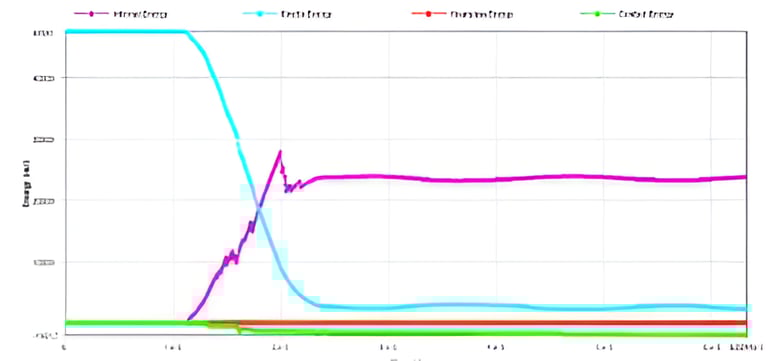
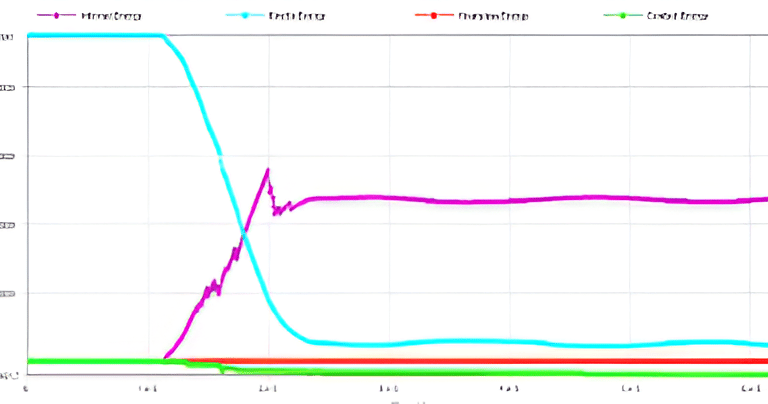
Bullet kinetic energy reduction across combinations: 45.6–46.2 J
Minimum inner-layer deformation ranged from 0.105 mm to 0.195 mm
Average heat flux values varied widely, from ~182 W/m² to ~1.43×10⁵ W/m² depending on material selection
Average vest temperatures ranged from ~25.1 °C to ~34.8 °C
Final ranking identified Graphene–Boron Carbide–Spectra stack-up as the optimal configuration based on weighted performance metrics
Engineering Judgment & Trade-offs
Kevlar-based configurations minimized weight but exhibited higher deformation. Graphene-dominated stacks improved deformation control and thermal performance at the cost of increased mass. Ceramic strike-face layers enhanced ballistic resistance but influenced thermal gradients. The final selection balanced impact absorption, deformation, and thermal comfort rather than optimizing a single metric.
Tools & Methods
SOLIDWORKS CAD, ANSYS ACP, ANSYS Explicit Dynamics, ANSYS Thermal, composite laminate modeling.
Outcome / Takeaway
The study demonstrated a structured multiphysics workflow for evaluating ballistic armor concepts. Quantitative comparison across impact, thermal, and weight metrics enabled informed material selection, identifying a graphene-based composite stack as the most effective overall design.